WHAT'S NEW


2009 Scovie Awards
2009 Scovie Awards

The annual Scovie Awards recognize top fiery foods products from around the globe. It is one of the world’s most competitive gourmet food competitions sponsored by the Fiery-Foods & BBQ magazine and National Fiery Foods & Barbecue Show.


Bay Valley Foods Heats Things Up at the Scovie Awards

WESTCHESTER, Ill., Nov. 13 /PRNewswire-FirstCall/ -- Bay Valley Foods, a division of TreeHouse Foods (NYSE: THS), announced that its San Antonio Farms division won several awards at the 2010 Scovie Awards competition, one of the world's premier gourmet food competitions. San Antonio Farms was awarded three first place, two second place and three third place awards, demonstrating the Company's fine tradition of developing compelling, on-trend premium salsas and pasta sauces. The Scovie Awards recognize top fiery food products, as determined by top culinary experts in rigorous blind tastings of hundreds of the world's most lauded gourmet foods. Entrants in this year's competition represented companies from 32 states and four countries.

San Antonio Farms took home the following awards:
  • Tomatillo Category - first and second place for Roasted Salsa Verde and Eva's Salsa Verde
  • Mild/Medium Category - first place for Roasted Sweet Pepper Salsa
  • All Natural Category - first place for Roasted Fresh Tomato Salsa
  • Habanero Category - second place for Roasted Habanero Salsa
  • Prepared Sauce Category - third place for Creamy Red Pasta Sauce
  • Cheese Category - third place for All Natural Monterey Jack Cheese

About 800 products from around the world compete for top honors each year. The Scovie Awards were created by Dave DeWitt, founder and publisher of Fiery-Foods & Barbecue SuperSite and founder of the National Fiery Foods & Barbecue Show. Named for Wilbur Scoville, who pioneered a rating scale for spicy foods, the Scovie Awards have become the industry standard for excellence in more than 80 categories of fiery foods and BBQ.

About TreeHouse Foods

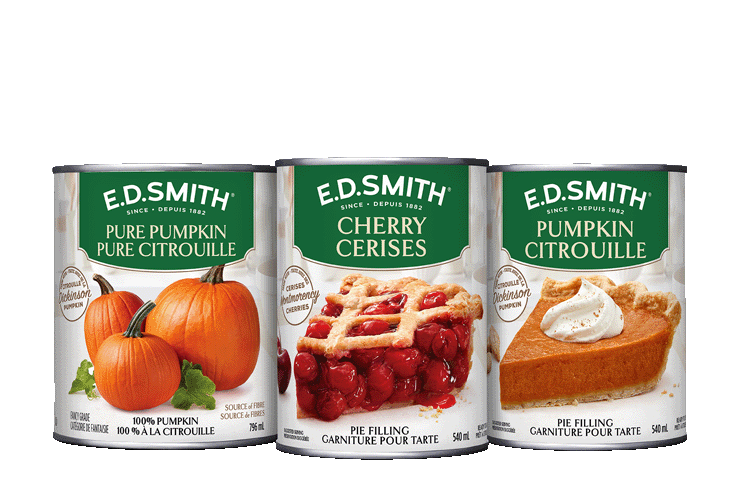
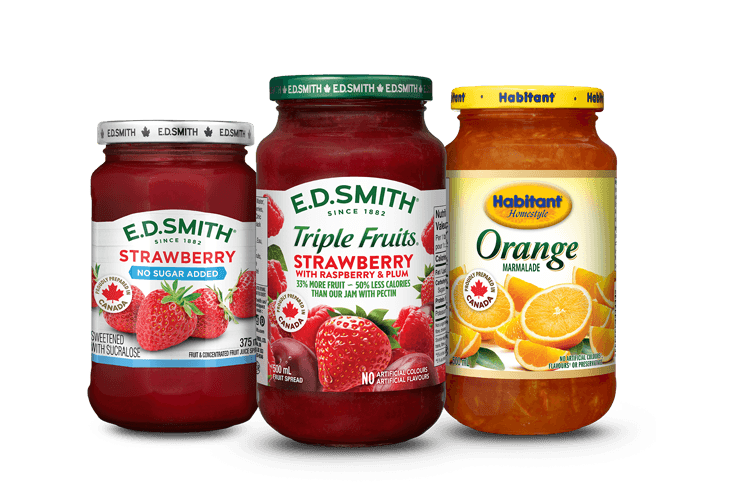
TreeHouse is a food manufacturer servicing primarily the retail grocery and foodservice channels. Its products include non-dairy powdered coffee creamer; canned soup, salad dressings and sauces; salsa and Mexican sauces; jams and pie fillings under the E.D. Smith brand name; pickles and related products; infant feeding products; and other food products including aseptic sauces, refrigerated salad dressings, and liquid non-dairy creamer. TreeHouse believes it is the largest manufacturer of pickles and non-dairy powdered creamer in the United States and the largest manufacturer of private label salad dressings in the United States and Canada based on sales volume.

SOURCE TreeHouse Foods

Investor Relations of TreeHouse Foods, +1-708-483-1300, ext. 1331


San Antonio Farms in Growing Niche Salsa Market.
San Antonio-Express News, Sean M. Wood, 06/01/2005 

Business Journal

Organic San Antonio

Manufacturers across the city want a piece of the growing eco-friendly food market
San Antonio Business Journal - April 20, 2007
by Donna J. Tuttle

Talk about getting preferential treatment. Last month, 7,600 pounds of certified organic tomatoes were plucked from pesticide-free California plants, packed into special storage crates and shipped to San Antonio Farms for the Mexican sauce maker's first-ever batch of organic salsa.

Arriving at the salsa manufacturing plant on Old Highway 90, these ripe fruits were whisked to an exclusive storage section of the plant. Absolutely no fraternizing with ordinary tomatoes allowed. Only after the plant was completely cleaned, sanitized and rinsed could these red beauties come in contact with the stainless steel blades that diced and mixed all the organic ingredients.

Image Cooked, packed and sealed into 24,000 containers of salsa that carried the coveted certified organic flag, the tomatoes were loaded into a truck and transported to the Northeast to be sold under private label Herr's Organic Salsa.

"We have to operate our organic program in a way that I am able to answer the most skeptical customer who asks: How are you going to prove to me that you only used organic ingredients, that your facility was properly maintained in an organic nature and that your finished goods can maintain your organic seal?" says Terry Bleecker, director of quality for San Antonio Farms.

Vegetable reverence of this sort is spreading across the globe as food manufacturers and producers try to capture part of the ever-growing organic food market. Higher rates of heart disease and cancer, pet food disasters, mad cow worries and an Oscar award for former Vice President Al Gore's "Inconvenient Truth" film have broadened the organic customer base to include more than tree-huggers and granola moms.

In San Antonio , organic food is primarily manufactured by private grocery powerhouse H-E-B through its Central Market Organics brand, which first introduced its organic salsas and brown eggs in 2003.

Today, the brand produces 170 Central Market Organic items -- including Italian soda, popcorn, tortilla chips, apple juice and crackers -- available in different quantities throughout all H-E-B stores, and more products are slated for the future, says Leslie Lockett, director of public affairs for H-E-B.

"From a Central Market Organic point of view, interest in organics is at an all-time high," she says.

Other retailers in the area -- like Sun Harvest Farms, Target, Wal-Mart, Whole Foods and even convenience stores -- offer organic products for sale. Wholesale giant Costco is also doing a booming organic business, says Dave McGuire, general merchandising manager for Costco's Texas region. The average Texas Costco store carries about 60 organic products, McGuire reports, with half of those located in the foods section of the store (shelf stable milk, soy milk, cereals, fruits and vegetables) and the most popular items in the cooler section (milk, soy milk, eggs and yogurt).

What, exactly, is organic?

Organic conjures up all kinds of definitions with the general public.

"All the market research I've read says that when consumers read 'organic' they're ascribing all kinds of benefits to the product," says Jack Kelly, president of San Antonio Farms. "So I don't think all consumers truly understand what it means."

Organic is as much about the way food is produced and processed as it is about the food itself. To be certified organic, the agricultural product must be produced in accordance with the Organic Foods Production Act of 1990. In very basic terms, organic foods "are produced without using most conventional pesticides, genetic engineering, petroleum-based fertilizers, or sewage sludge-based fertilizers. Organic agricultural products are produced without the use of ionizing radiation. Organic meat, poultry, eggs, and dairy products come from animals that are given no antibiotics or growth hormones," according to the USDA.

Before a product can be labeled organic, a certifying agent inspects the farm where the food is grown to ensure it meets the USDA organic standards. These agents, either state or private, are approved by the USDA. Companies that handle or process organic food must be certified, too. It should be noted that the USDA makes no claims that organically produced food is safer or more nutritious than conventionally produced food.

Organic salsa or bust

At San Antonio Farms, where the organic program is certified by the private certifying agent Oregon Tilth, the company had to take a cautious approach to buying the ingredients for its first organic salsa. Tomatoes, tomato paste and dehydrated garlic all are shipped in from California .

"For the product launch, though, we're using frozen jalapeno pepper and onion," Bleecker says. "The reason: We're not sure how much to contract for in the fresh environment. If we contract for fresh, we own all those, and we don't have a place for them, and then we're stuck with them. Peppers have a 12-day shelf life. If you don't use them, you have to throw them out."

Individually Quick Frozen (IQF) organic peppers and onions offer a more practical solution for now.

"Once we establish our product line, we'll switch over to fresh," Bleecker says.

Although learning and implementing the organic manufacturing process has been time consuming, the application is not entirely foreign to the salsa maker. For one, the plant already has a kosher program in place which requires similar production standards and regular rabbinical blessing. For another, San Antonio Farms already creates a product -- salsa -- which uses all natural ingredients.

"It's not been a quantum leap for us," Kelly says. "It's not like we were taking a junk food product and making it organic. It's a natural move for us. We're ready and poised to produce more organic products as our customers demand."


San Antonio Express News

According to research by Schaumburg, Ill.-based ACNielsen, salsa sales are hot while catsup sales are not. More than $646 million of salsa was sold in the 12 months prior to April 16, 2005. That's compared with $455.1 million of catsup.

Salsa is a little more expensive, so catsup still sells more units. But sales of 16-ounce units of catsup fell 1% during that time while salsa sales increased 1.5 percent.

Private label salsa, which is what San Antonio Farms makes, has the second-largest share of the salsa market in terms of units sold, according to Information Resources Inc. in Chicago.

Its 14 percent of the market is behind Tostitos Salsa, with 30.8 percent, and ahead of Pace, with 10.9 percent. Tracking the private label salsa makers is hard because most are privately held and there is no real clearinghouse of information on these companies.

But San Antonio Farms' Kelly said there are about a dozen competitors, and he figures his company is the largest.

San Antonio Farms makes about 12 different salsas for the grocery chain under the H-E-B name. It also makes eight other versions under the Hill Country Fare label.

"They have a fantastic tie to San Antonio," said Tim Kopania, H-E-B's business development manager for salsa. "They understand our market. They're from here like we're from here."

Kopania said San Antonio Farms also understands salsa heat indexes and how to control them better than most producers.

He also said the company is very innovative, though he didn't want to talk about its latest salsa innovation. Kopania did credit them with the creation of the habanero salsa H-E-B sells.   "That's a good example of innovation," he said. "It holds its own. It's extremely hot. There are people here that heat is their thing."

San Antonio Farms has about 50 customers. Its brands are sold in nearly every state as well as a few countries overseas. Aside from H-E-B and Costco, customers include Kroger, Albertson's and Food Lion.

San Antonio Farms makes the salsa base for Chili's restaurants. The restaurants add water, tomatoes, onions and other ingredients. It's also working on a marinara sauce for the Ruby Tuesday restaurant chain.  You also can thank San Antonio Farms for the Whataburger salsa packets.

The company also looks for new products and new applications for its 40 different formulas.   "We want to make sure we're in there with our products," Kelly said.


  Legal | Privacy | Contact Us
Copyright ©2009 Bay Valley Foods, LLC